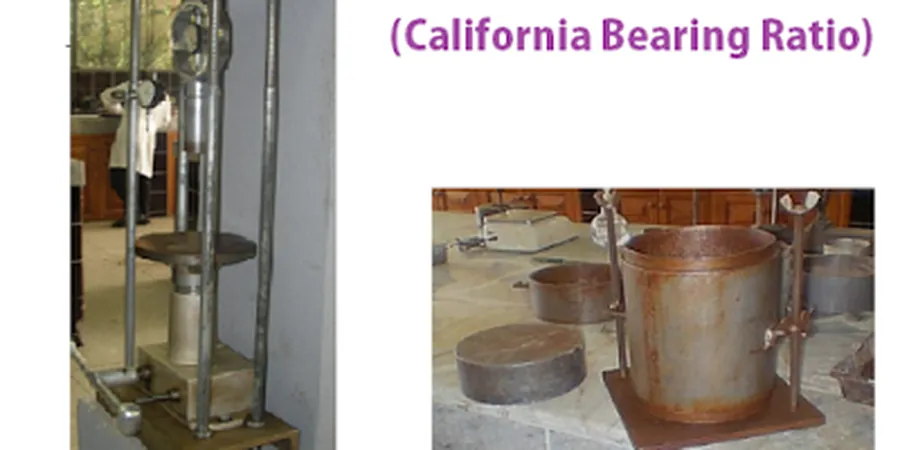
A warehouse expansion off Peña Boulevard hit project delays last fall. The structural fill looked solid during compaction but the imported borrow showed erratic moisture behavior under load. That is when the pavement consultant ordered a laboratory CBR test series. Denver’s semi-arid climate and freeze-thaw cycles stress subgrade materials in ways that proctor density alone cannot predict. The California Bearing Ratio test measures penetration resistance of compacted soil at controlled moisture and density, giving direct input for flexible and rigid pavement thickness design. We run soaked and unsoaked CBR specimens to match field conditions: spring thaw saturation versus late-summer dry profiles. The data feeds AASHTO 1993 pavement design equations and the Denver Public Works pavement cut repair specs. For projects near the South Platte River alluvium, where silty sands alternate with lean clays, we often pair the grain size analysis with CBR testing to correlate gradation to bearing capacity before finalizing the stone base course thickness.
A CBR value of 3 versus 8 can mean the difference between 6 inches and 12 inches of aggregate base in Denver’s freeze-thaw environment.
Methodology and scope
Local considerations
Compare two Denver corridors: Federal Boulevard through the Denver formation claystone versus Tower Road across old alluvial terrace deposits. The claystone weathers to a low-permeability subgrade with CBR values often below 4 when saturated, requiring thick aggregate base or lime stabilization. The alluvial sands near Tower Road can post CBR values above 15 when well-graded and compacted, but they lose strength rapidly if fines content exceeds 12 percent. Skipping laboratory CBR testing means guessing at the structural number for pavement design. Overdesign wastes budget on unnecessary base course. Underdesign leads to rutting, fatigue cracking, and potholes within two freeze-thaw cycles. The City and County of Denver Public Works requires CBR testing for all arterial street reconstructions and commercial driveway approaches. We have seen subgrade CBR of 2 on a soaked specimen from a site near Smith Road where shallow groundwater softened the formation during spring melt.
Explanatory video
Applicable standards
ASTM D1883-21, ASTM D698-12, ASTM D1557-12e1, AASHTO T-193, Denver Public Works Infrastructure Design Manual
Associated technical services
Soaked Laboratory CBR Test
96-hour submerged CBR per ASTM D1883. Specimens compacted at target field density and tested after saturation to simulate worst-case spring conditions. Used for flexible pavement design on Denver arterial and collector streets.
Unsoaked CBR with Swell Measurement
Penetration test immediately after compaction with swell monitoring during soaking. Critical for expansive subgrade evaluation in Denver’s montmorillonite-rich claystone formations. Provides swell percent plus CBR for rigid pavement joint design.
Typical parameters
Frequently asked questions
How much does a laboratory CBR test cost in Denver?
A standard laboratory CBR test with three compaction points and one soaked penetration costs between US$140 and US$200 per specimen, depending on whether you need swell measurement and unsoaked data. A full pavement evaluation package with moisture-density relationship plus CBR at three compaction energies typically runs toward the higher end of that range.
How long does CBR testing take?
The soaking period alone requires 96 hours per ASTM D1883. Including compaction, setup, soaking, and penetration testing, a standard CBR test report is ready in 7 to 10 business days. Rush turnaround with weekend soaking is available for projects on critical path schedules.
What CBR value does Denver Public Works require for residential streets?
Denver Public Works typically requires a minimum soaked CBR of 5 for residential local streets and 10 for arterial and collector streets, though the exact requirement depends on traffic loading and pavement section type specified in the Infrastructure Design Manual. Subgrade with CBR below 3 generally requires stabilization or over-excavation.