A lot of projects in the Denver metro area hit a wall—literally—when they uncover soft, collapsible silts or old alluvial deposits. The reflex is often to over-excavate, but that can blow the budget fast. Stone column design flips that problem on its head by reinforcing the weak ground in place, turning a lousy subgrade into a stiff, drainable matrix. We see this constantly from Golden to Aurora, where the subsurface can switch from hard claystone to loose fill within a single block. The real mistake isn’t encountering bad soil; it’s assuming a standard shallow footing will work without verifying the post-treatment modulus. Before mobilizing a vibroflot, you need a design that accounts for the column diameter, spacing, and the native soil’s undrained shear strength. For sites where the fines content is high and drainage is critical, we often pair the column layout with an in-situ permeability test to confirm the radial drainage performance.
Stone columns don't bypass bad soil—they reinforce it, creating a composite mass that drains, densifies, and stabilizes the ground beneath your foundation.
Methodology and scope
The method works by creating stiff, gravelly columns that share the load with the surrounding soil, reducing total settlement by 40 to 60 percent in typical conditions. We specify the backfill gradation and the depth to refusal—often hitting the claystone bedrock at 15 to 30 feet—to make sure the composite ground meets your bearing capacity target. In areas with loose silty sands, we cross-check the densification radius with results from a standard SPT drilling program to verify the treatment zone extends beyond the column grid.
Local considerations
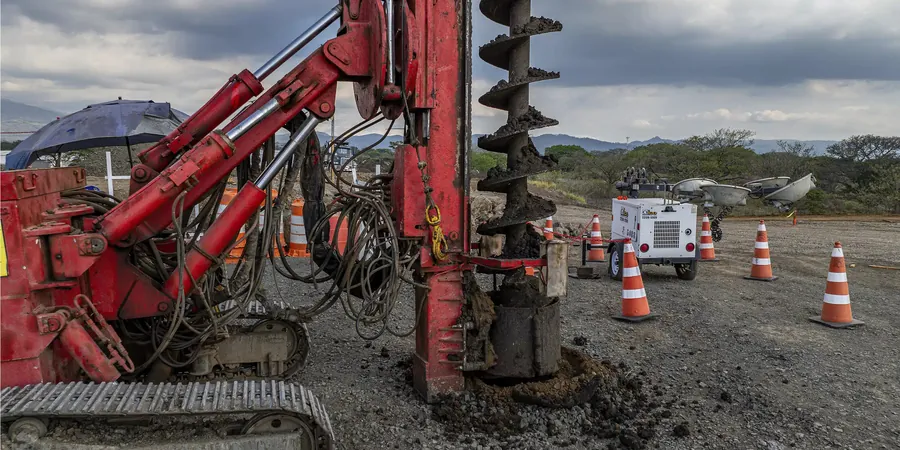
The vibroflot is a beast—a 7-to-12-foot-long steel cylinder with eccentric weights that spin to produce horizontal vibrations, sinking into the ground under its own weight and compressed air. In Denver, running this equipment near existing structures requires a fine touch. The vibrations can cause lateral soil movement or settlement of adjacent footings if the column spacing is too tight or the amperage is pushed too high. We always run a pre-production test section to calibrate the peak particle velocity and set exclusion zones. Skipping this step has led to cracked party walls and very unhappy neighbors. The design must also account for the risk of necking in zones with high groundwater inflow, which can wash fines into the stone column and choke the drainage path. A rigorous quality control program—checking depth, amperage, and stone consumption per linear foot—is the only way to guarantee the installed columns match the design intent.
Applicable standards
IBC Chapter 18 (Soils and Foundations), FHWA-NHI-16-027 Ground Improvement Manual, ASTM D1586 Standard Penetration Test, ASTM D448 Standard Sizes of Coarse Aggregate
Associated technical services
Design-Build Stone Column Programs
Complete design package including column layout, spacing calculations, settlement analysis, and installation specifications calibrated to Denver Formation soils. We supervise the test section and adjust the grid in real time based on amperage and refusal depth.
Post-Treatment Verification Testing
Combination of pre- and post-installation SPT or CPT soundings to quantify the improvement in N-value or tip resistance. We also run zone load tests on single columns and composite ground to confirm the design bearing capacity and modulus of subgrade reaction.
Typical parameters
Frequently asked questions
How deep can stone columns be installed in Denver's geology?
Typically 15 to 30 feet, until we hit the competent claystone of the Denver Formation. Deeper columns are possible if the bedrock is fractured or if soft lenses extend further, but the vibroflot's refusal criteria—usually a sustained amperage spike—dictates the final depth. We verify refusal against nearby boring logs to avoid misinterpreting a dense gravel lens as bedrock.
What does stone column design cost for a typical Denver lot?
Design fees generally range from US$1.450 to US$4.760 depending on the building footprint, number of columns, and the required settlement analysis. A simple grid for a single-family residential lot sits at the lower end, while a commercial warehouse with variable loading and strict total settlement limits pushes the scope toward the upper range.
Can stone columns be installed right next to existing foundations?
Yes, but with caution. We establish an exclusion zone based on the peak particle velocity from the test section, usually 10 to 15 feet from adjacent footings. Inside that zone, we may switch to a low-amperage dry bottom-feed method to reduce vibration impact. A pre-construction condition survey of neighboring structures is mandatory.