ASCE 7 and the IBC set the baseline, but Denver's geology writes its own rules. The Denver Basin's interbedded claystone, siltstone, and alluvial deposits create a tunneling environment unlike any other in Colorado. At a mile-high elevation, the near-surface groundwater in the South Platte River corridor and the swelling potential of the Pierre Shale demand a level of scrutiny that generic desktop studies simply cannot provide. We see projects stall because the ground model underestimated the squeezing behavior of the claystone or the perched water tables that emerge after spring snowmelt. Our analysis for soft ground tunnels integrates ASTM D1586 SPT data, lab-derived Atterberg limits, and consolidation testing to build a ground behavior profile that engineers can actually use during TBM or NATM advance planning. For deeper tunnel sections, we often supplement with a seismic refraction survey to map the bedrock interface with precision.
In the Denver Basin, the difference between a successful soft ground tunnel drive and a costly delay often lies in understanding the unsaturated behavior of the local claystone.
Methodology and scope
Local considerations
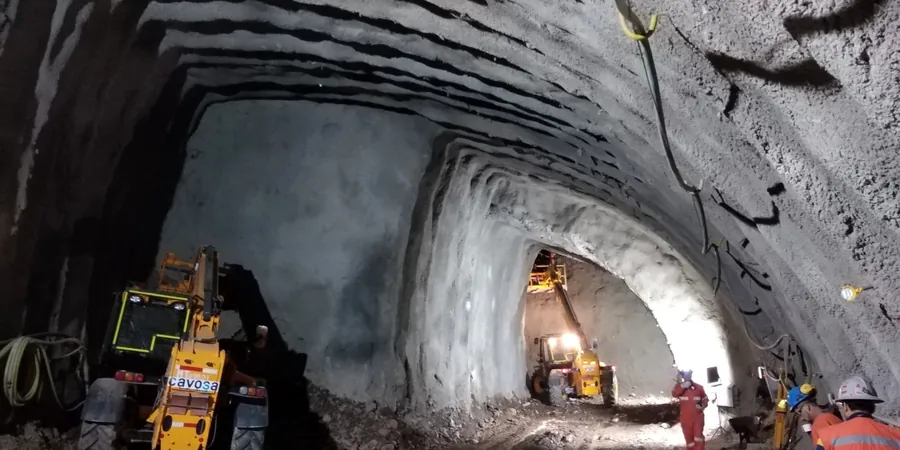
The most common mistake we see contractors make is assuming the Denver blue claystone behaves like a soft rock when it's actually a borderline material that transitions to soil-like behavior under stress relief. They open the face and expect a stand-up time of several hours, only to see raveling within minutes. This isn't just a safety incident waiting to happen; it triggers over-excavation, excessive settlement at the surface, and grouting volumes that blow the budget. Without a site-specific soft ground analysis, the contractor has no basis for selecting the right TBM face pressure or the appropriate sequence of spiling and pre-support. The consequence is a tunnel drive that lurches from one overbreak event to the next, with the constant risk of a sinkhole opening up in a Denver street above. The cost of the investigation is negligible compared to the cost of a single day of downtime on a stuck TBM.
Applicable standards
ASCE 7-22 (Minimum Design Loads), IBC 2021 Chapter 18 (Soils and Foundations), ASTM D1586-18 (Standard Penetration Test), ASTM D2487-17 (Classification of Soils)
Associated technical services
Tunnel Alignment Ground Characterization
We develop a longitudinal geotechnical model along the tunnel axis, mapping the transition zones between the alluvial deposits and the underlying Denver Formation claystone. This includes defining the weathering profile and identifying the zones where mixed-face conditions will occur.
Face Stability and Squeezing Assessment
Using the results from consolidation and triaxial tests, we calculate the anticipated convergence and the required support pressure. This directly informs the TBM operational parameters or the excavation sequence for sequential excavation methods.
Typical parameters
Frequently asked questions
What is the typical cost range for a soft ground tunnel geotechnical investigation in Denver?
Depending on the tunnel length and the complexity of the Denver Basin geology, a comprehensive investigation program typically ranges from US$4,600 for a short utility tunnel to US$18,830 for a longer alignment requiring deep borings and advanced lab testing. The final cost depends on access constraints and the number of boreholes required.
How do you account for the swelling potential of Denver's claystone in the tunnel design?
We run a series of free-swell and swelling pressure tests on undisturbed samples, then correlate those results with the mineralogy of the clay fraction. The data allows us to specify a swell-inhibiting gap behind the lining or recommend drainage measures to prevent moisture fluctuations in the rock mass surrounding the tunnel.
How long does the lab testing phase take for a tunnel project?
The laboratory program, including consolidation, triaxial, and swell testing, generally requires three to four weeks. Consolidation tests on the finer-grained soils of the Denver Basin are time-dependent, but we expedite the factual reporting so the design team can work with preliminary parameters while the final report is being compiled.