The most common mistake we see on Denver jobsites isn't a calculation error; it's assuming the soil under the new fill is uniform because it looked fine during excavation. This assumption falls apart quickly here. A contractor in Aurora might hit sandy terrace deposits at one end of a pad, then swing into weathered Denver Formation claystone at the other, each requiring a completely different moisture-density specification. When a sand cone density test fails repeatedly because the lab was given a single composite sample instead of material-specific Proctors, the rework costs and schedule delays hit the project hard. Our approach avoids this entirely by linking the Proctor test directly to the site geology, running Standard (ASTM D698) or Modified (ASTM D1557) curves tailored to the actual fill sources identified in the geotechnical report. For Denver's regulatory environment, where compaction must meet the City and County of Denver Building Code amendments to the IBC, having a defensible laboratory curve isn't just best practice—it's the only way to close out earthwork inspection without a headache.
A Proctor test isn't a pass/fail box to check; it's a moisture-density fingerprint of the specific borrow material going into the lift.
Methodology and scope
Local considerations
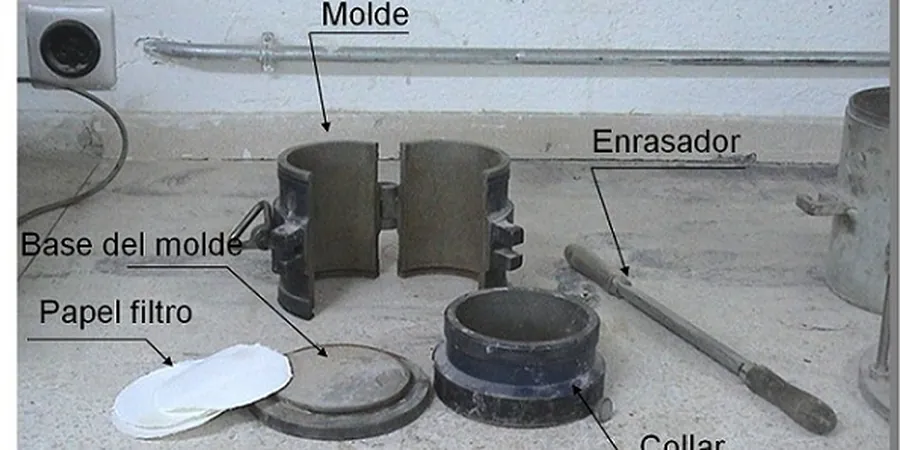
Denver's semi-arid climate creates a tricky moisture control problem that doesn't exist in more humid regions. The native soils lose moisture rapidly during grading, especially with our low humidity, frequent winds, and high-altitude sun. A material that hits optimum water content at the borrow pit can be two percent dry by the time the sheepsfoot roller makes its first pass, leaving the contractor chasing density numbers that the laboratory curve says are unachievable. This is where the Modified Proctor test becomes essential. By compacting the soil with a 10-lb hammer dropped 18 inches—simulating the energy of heavy vibratory rollers—we establish a realistic maximum dry density for the contractor's equipment. For structural fill supporting spread footings on expansive Front Range soils, the specification often demands 95% of Modified Proctor density at moisture within two points of optimum. Without a current curve run on the exact borrow material, including correction for oversize particles per ASTM D4718, the field technician is essentially guessing, and the risk of post-construction settlement under Denver's freeze-thaw cycles becomes a long-term liability.
Applicable standards
ASTM D698-12(2021) Standard Test Methods for Laboratory Compaction Characteristics of Soil Using Standard Effort, ASTM D1557-12(2021) Standard Test Methods for Laboratory Compaction Characteristics of Soil Using Modified Effort, ASTM D4718-87(2007) Standard Practice for Correction of Unit Weight and Water Content for Soils Containing Oversize Particles, IBC Chapter 18 (Soils and Foundations) as amended by City and County of Denver Building Code
Associated technical services
One-Point Proctor Verification
For projects where the borrow source is consistent and a full family of curves exists, we run a single-point verification per ASTM D698 or D1557 to confirm the material hasn't shifted during excavation. This rapid check, often turned around same-day for active Denver grading operations, catches changes in clay content or sand lenses that would invalidate the original laboratory curve.
Moisture-Density Relationship with Oversize Correction
Denver's aggregate base courses and some alluvial terrace deposits contain significant gravel fractions. We perform the full Modified Proctor on the minus-3/4-inch fraction, then mathematically correct the curve per ASTM D4718 to reflect the in-situ gravel content. This corrected maximum dry density is what the field technician must use for nuclear gauge comparisons, and omitting this step leads to rejecting perfectly adequate fill.
Typical parameters
Frequently asked questions
What's the cost for a Standard Proctor test in Denver?
A Standard Proctor (ASTM D698) typically runs between US$110 and US$160, while the Modified Proctor (ASTM D1557) ranges from US$160 to US$230, depending on whether oversize correction is required and the urgency of the turnaround. Our pricing includes the complete moisture-density curve, ZAV line, and a digital report ready for submission to Denver CPD.
Which Proctor method does the Denver building department require for structural fill?
The Denver Building Code, under its IBC amendments, generally requires structural fill beneath foundations to achieve 95% of the maximum dry density determined by ASTM D1557 (Modified Proctor). The geotechnical engineer's report will specify the exact method and minimum compaction for the project, but the Modified Proctor is the default standard for engineered fill supporting spread footings and slabs in the metro area due to our expansive soil conditions.
How quickly can we get Proctor results during a Denver grading operation?
We offer standard 48-hour turnaround on Proctor tests, with expedited 24-hour results available for active earthwork where fill placement is weather-dependent. Denver's afternoon thunderstorms can shut down grading quickly, so we prioritize communication: as soon as the curve is validated, the optimum moisture and maximum dry density are sent to the field technician before the formal PDF report is issued.