The soil profile beneath a site in Cherry Creek rarely matches what you find three miles east in Green Valley Ranch. One neighborhood sits on weathered Denver Formation claystone at shallow depth; the other overlies feet of wind-deposited silts and older alluvial terrace gravels that can collapse when wetted. Foundation design that works for one will fail for the other. Our approach starts with correlating SPT drilling data and laboratory index tests to map exactly where the competent bearing stratum begins across the footprint. At 5,280 feet above sea level, Denver’s semi-arid climate intensifies shrink-swell behavior in the upper weathered zone, so we never assume uniform conditions from a single boring. The IBC requires a minimum 12-inch embedment into natural ground, but local experience shows that number is often insufficient when the water table fluctuates beneath clay soils with PI values exceeding 30.
Design bearing in Denver Formation claystone can exceed 4,000 psf, but only if the foundation is keyed below the seasonal moisture fluctuation zone.
Methodology and scope
Local considerations
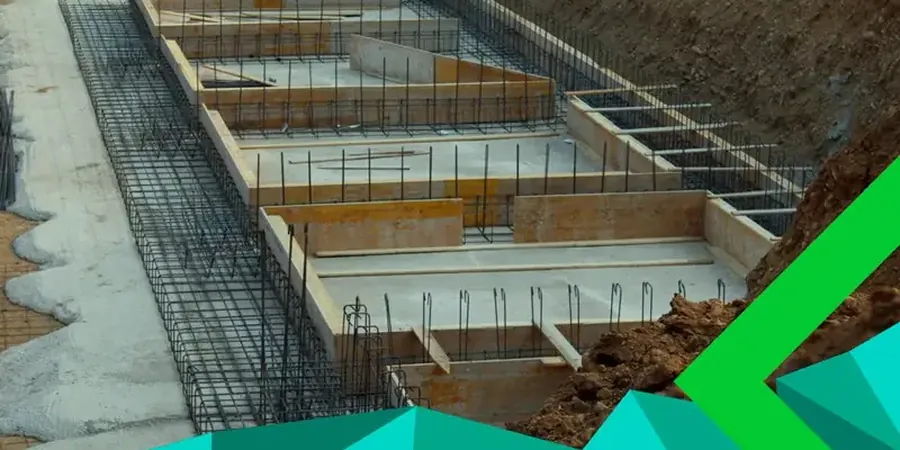
A track-mounted drill rig sets up over the building footprint and advances hollow-stem augers through the weathered zone while the crew logs recovery and blow counts every 2.5 feet. The real risk in Denver isn’t low bearing capacity—it’s differential heave. When a footing bears partly on moist clay and partly on drier clay, the moisture differential across just ten horizontal feet can generate swell pressures above 15,000 psf, enough to crack a slab-on-grade and tilt perimeter walls. We’ve seen distress in Aurora and Lakewood where gutters discharged too close to the foundation, creating a wet bulb that heaved one corner while the rest of the structure remained stable. Our reports specify a uniform undercut depth and, where needed, a capillary break of free-draining sand to cut off moisture migration. ASCE 7-22 Section 12.13 also requires that shallow foundations be tied together with grade beams in Seismic Design Category C or higher, a detail that Denver plan checkers enforce rigorously.
Applicable standards
ASTM D1586-18 (Standard Penetration Test), ASTM D2487-17 (Unified Soil Classification System), IBC 2024 (Chapter 18 – Soils and Foundations), ASCE 7-22 (Minimum Design Loads – Seismic)
Associated technical services
Bearing Capacity and Settlement Analysis
We calculate allowable bearing pressure using Vesic's method and estimate immediate and consolidation settlement under the design load. Outputs include the modulus of subgrade reaction for slab-on-grade design and recommended footing widths for strip and spread footings.
Expansive Soil Mitigation Design
For sites with PI values above 25, we specify over-excavation depths, moisture-conditioned fill, and horizontal moisture barriers. The design references the Colorado Geological Survey's expansive soil hazard maps and local building department amendments to IBC Chapter 18.
Typical parameters
Frequently asked questions
What is the typical allowable bearing pressure for shallow foundations in Denver?
In stiff native clay of the Denver Formation, allowable bearing typically ranges from 2,000 to 3,500 pounds per square foot. Where the foundation bears directly on weathered claystone bedrock, values can reach 4,000 to 8,000 psf, provided the rock is continuous and free of dipping joints. Sand and gravel lenses along the South Platte corridor often support 3,000 to 5,000 psf. Every value must be confirmed by subsurface exploration at the specific site.
How deep must footings be placed to avoid frost heave in Denver?
The IBC and Denver building code require a minimum footing embedment of 30 inches below finished grade for frost protection. However, in exposed sites on the eastern plains or at higher elevations near Ken Caryl, we often specify 36 inches to account for colder microclimates and the higher thermal conductivity of moist clay soils.
What does a shallow foundation design report cost in the Denver area?
For a typical single-family residential or small commercial structure on a standard city lot, a complete geotechnical investigation with shallow foundation design runs between US$1,780 and US$3,490. The final figure depends on the number of borings, laboratory testing scope, and whether expansive soil mitigation measures are required.
Does Denver require a geotechnical report for shallow foundations?
Yes. The City and County of Denver requires a geotechnical investigation and foundation design report for all new commercial, industrial, and multi-family construction. Single-family homes and duplexes on known expansive soils also require a report. The submittal must be stamped by a Colorado-licensed professional engineer and must address bearing capacity, settlement, swell potential, and seismic design category per ASCE 7.